
CIRCLE – NODE AND SPRING
Circle – Node and Spring is a proposal for a public artwork at Fredriksborg School, conceived as an orienting landmark, meeting point, and spatial junction within the schoolyard.
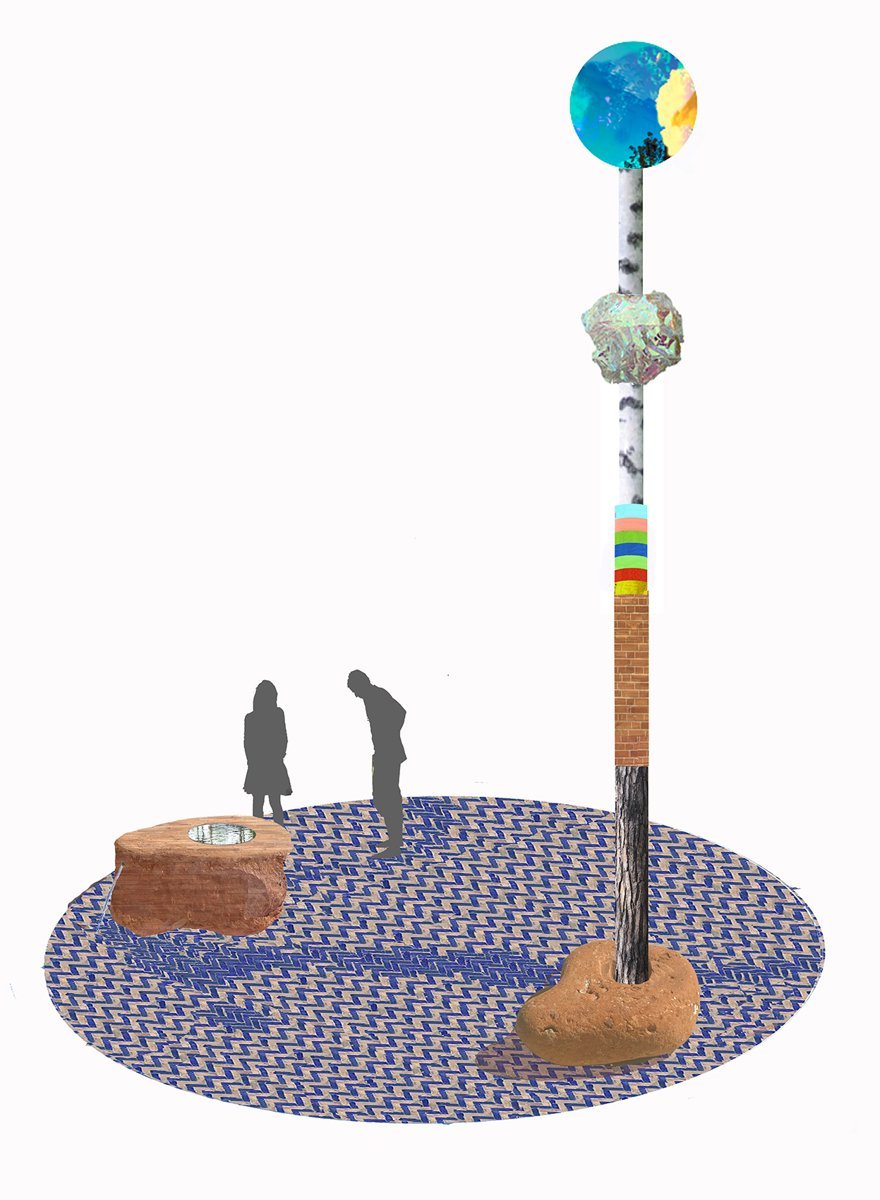
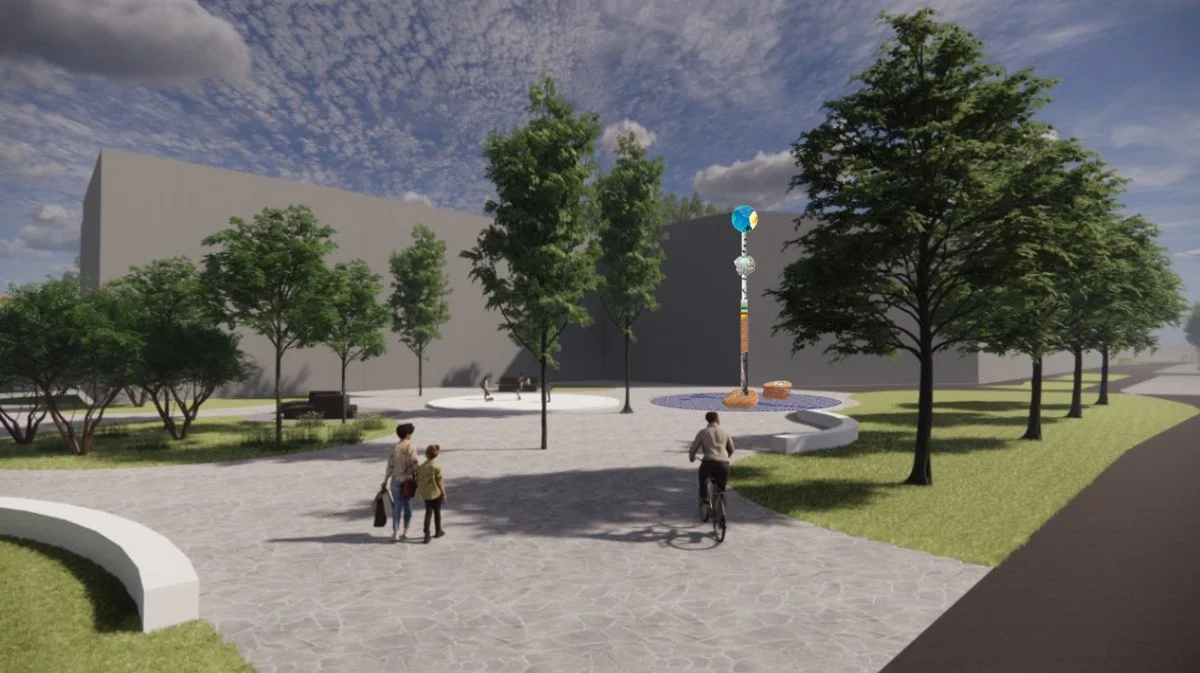
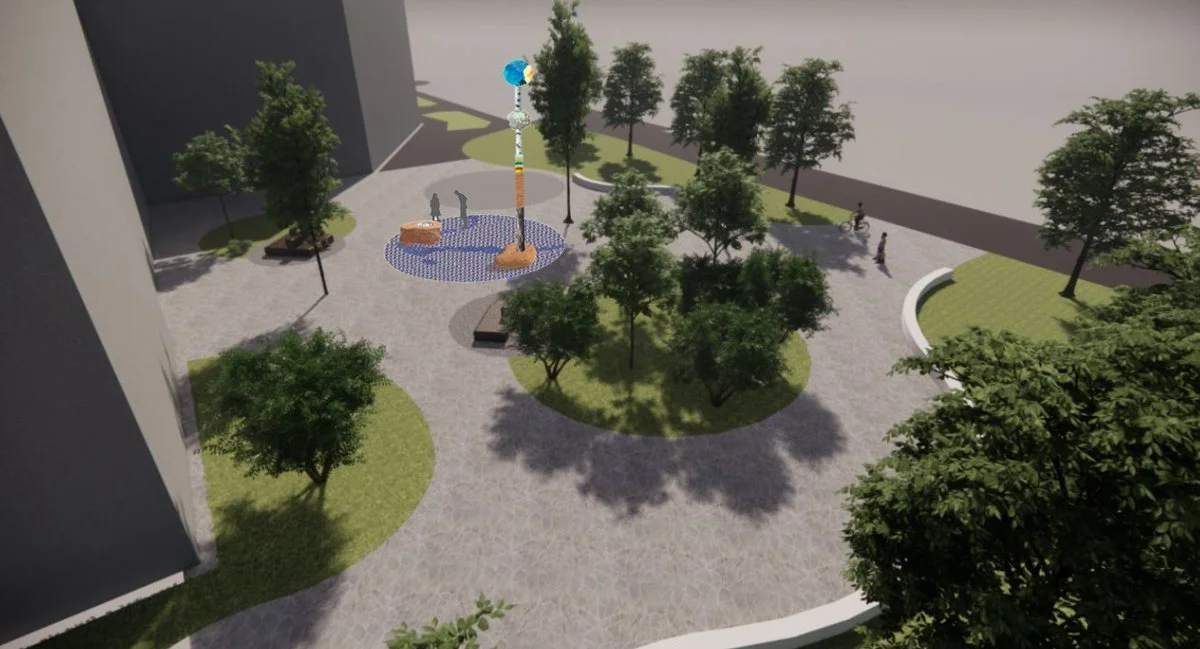
Circle – Node and Spring is conceived as the central symbol and meeting point of Fredriksborg School. The work functions as an landmark, a place of encounter, and a spatial junction within the schoolyard—along paths leading to the school and between different outdoor activities.
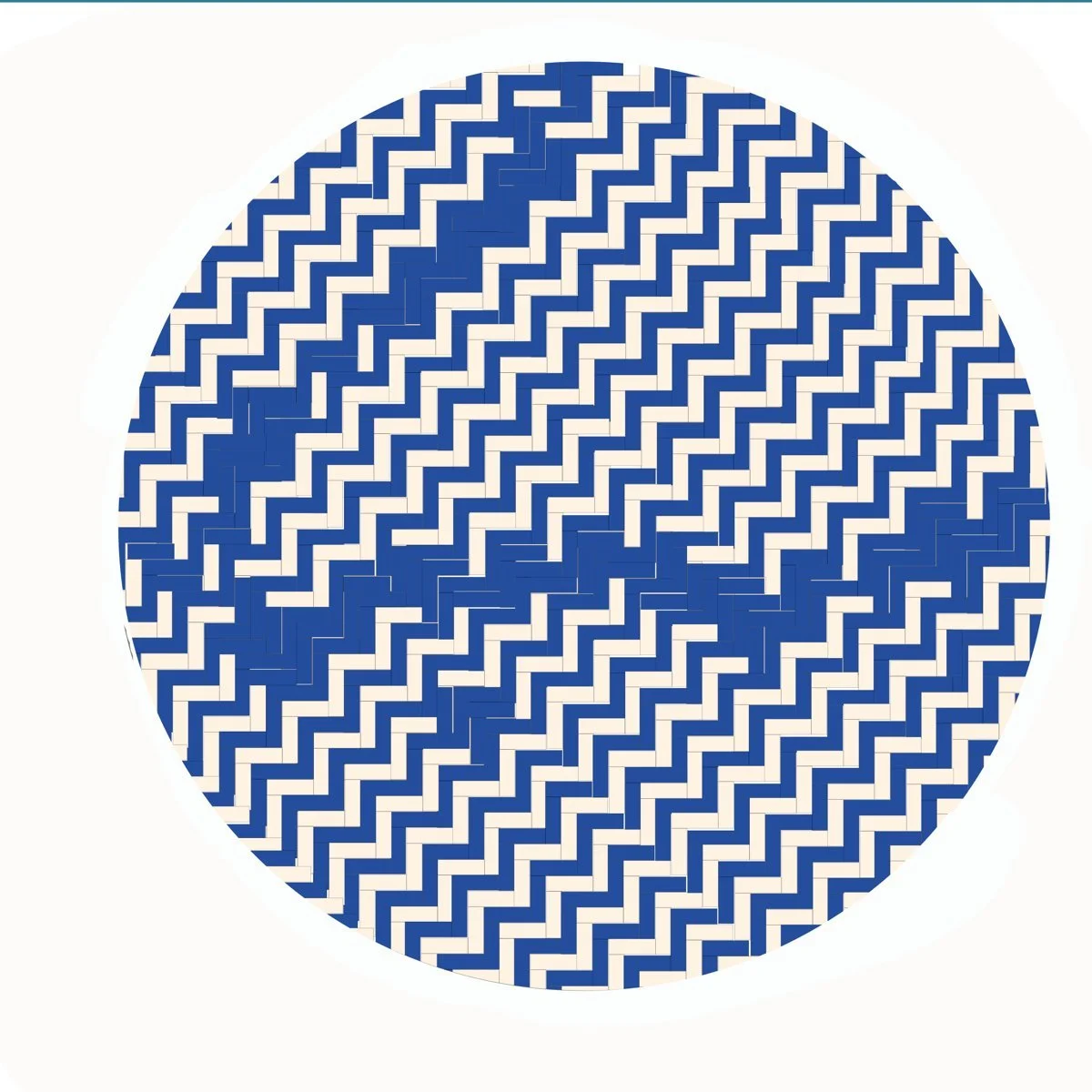
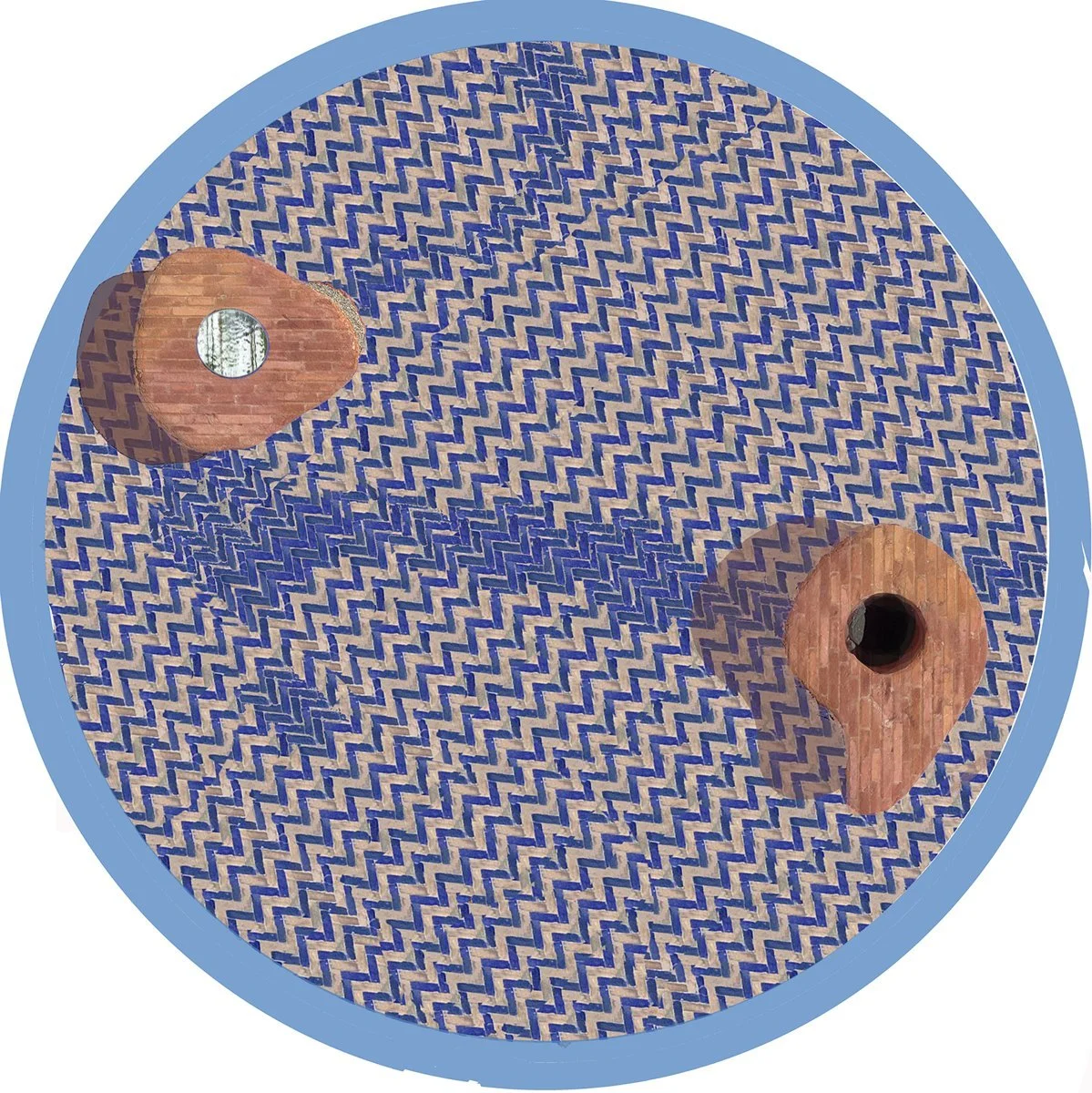
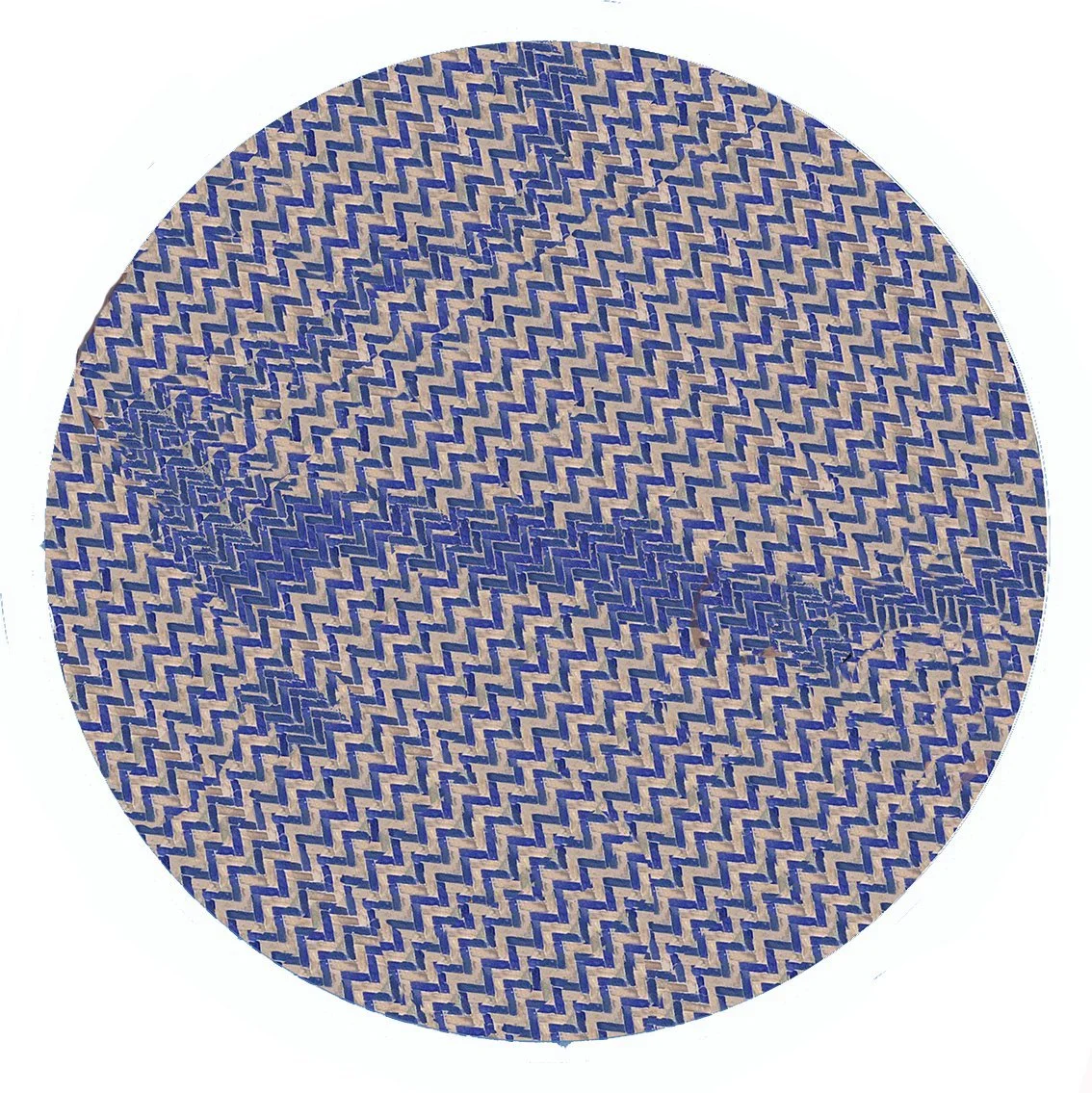
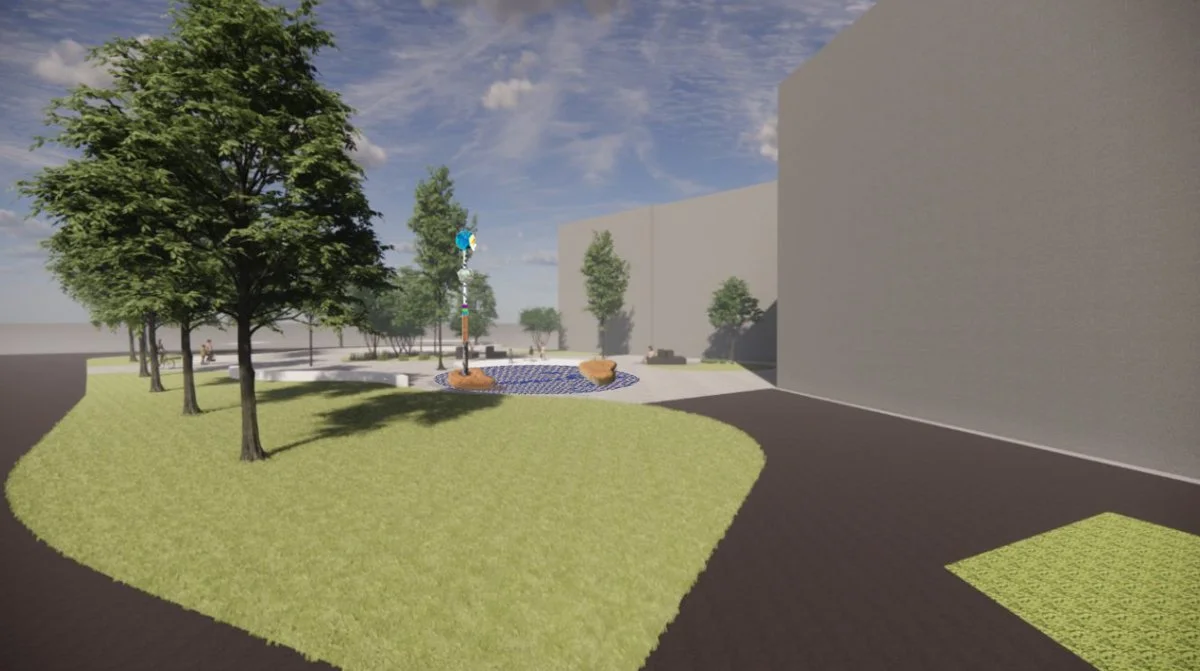
The circular ground formation is constructed from colored paving bricks, patterned in a way that evokes rippling water. The drawing suggests movement—perhaps an extension of the nearby river Viskan. These rhythms can be followed, walked, and felt bodily, inviting both passage and pause.
Two sculptural, sit-able forms emerge from the circle. Like the school itself, they rise from the ground and connect learning with leisure, lessons with breaks. Built from recycled brick, the forms carry traces of the site’s industrial history, expressed through reduced and carefully shaped volumes.
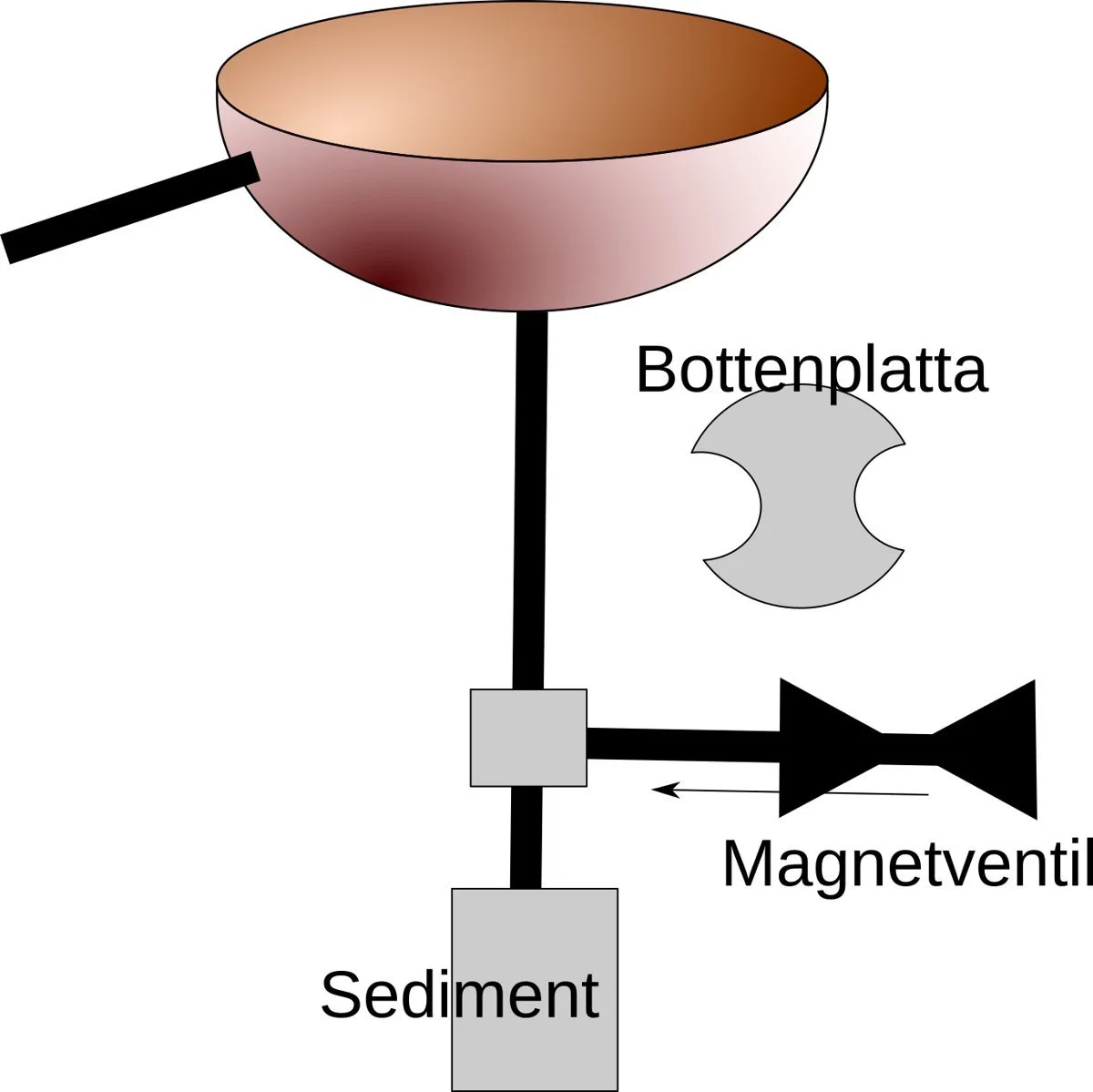
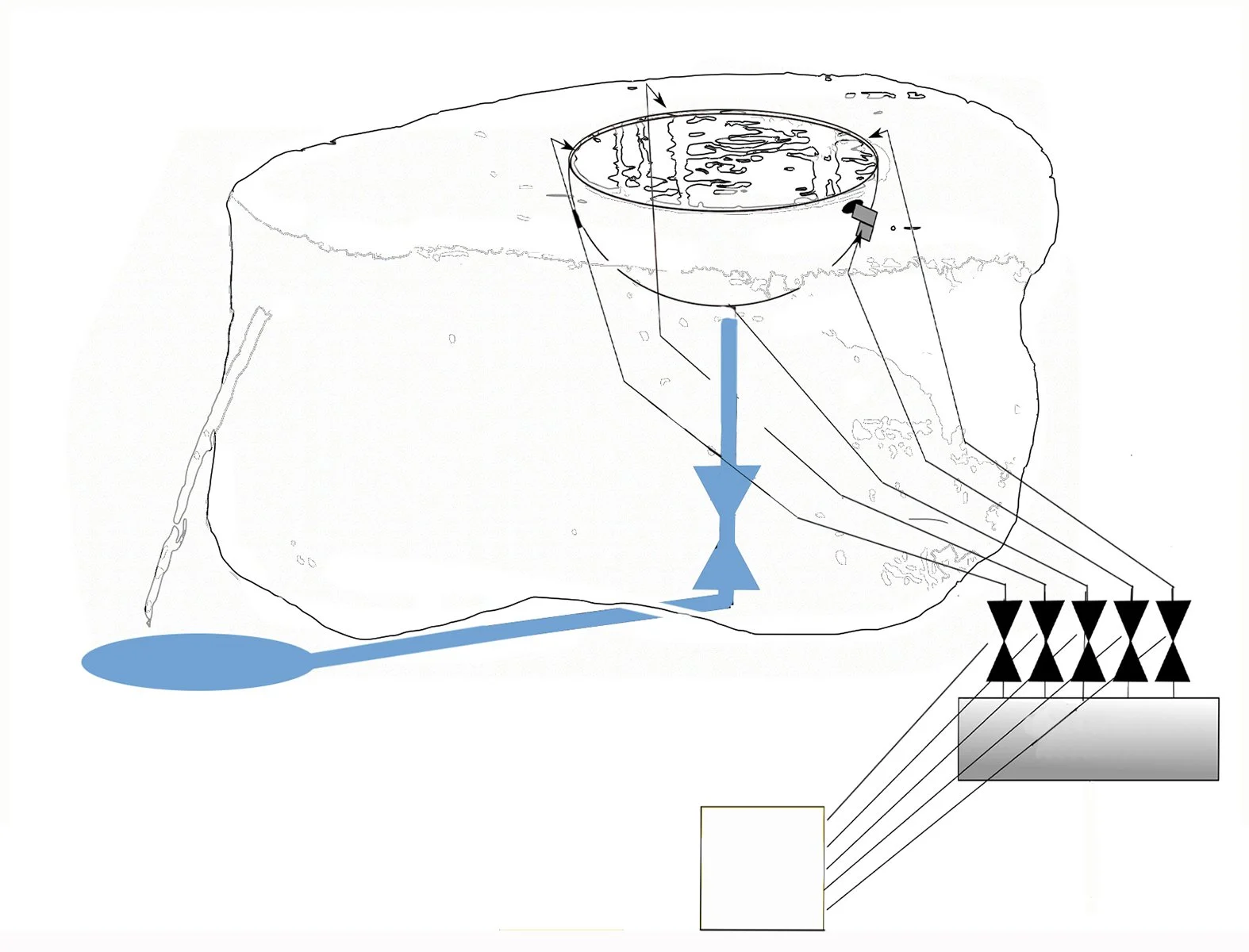
One of the brick forms contains a spring. Two subtle water inlets meet at a shallow angle, gently rippling the surface without breaking it. A small stream of water continues into a nearby well—ambiguous in function, echoing the site’s former role in water treatment. The slowly shifting water surface creates a calm and welcoming place to gather.
From the second brick form rises Node, a vertical sculptural column visible from all directions. From a distance it glimmers between the trees; up close, its material qualities and details gradually reveal themselves. Node acts as both an orientation point and a place to meet.
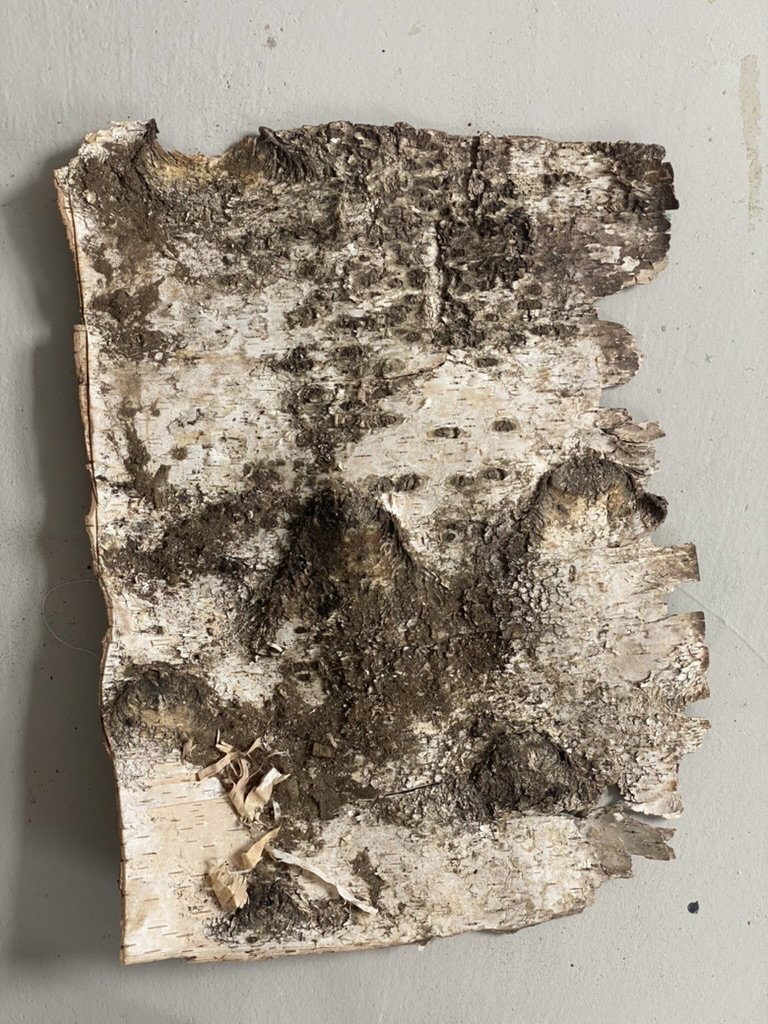
The column is composed of a sequence of elements that invite interpretation and imagination. A brick base encircles a pine trunk, transitioning into a chimney-like structure built from recycled brick. Above, the form shifts into a birch trunk cast in aluminum. Around its lower section, a series of transparent glass rings—alternatively cast in tinted epoxy—catch and refract light. At the center of the trunk sits an irregular, faceted sphere treated with a light-shifting, iridescent surface. The column is crowned by a light vane: two intersecting circles of rainbow-laminated optiwhite glass that reflect, refract, and split natural light, casting colored shadows across the ground as the sun moves.
The sculpture draws from natural forms found in the surrounding landscape while incorporating materials and techniques that speak to human invention. All components are executed in durable materials requiring minimal maintenance.
Circle– Node and Spring is designed to be experienced both from afar and in close proximity. It encourages movement, meeting, and lingering—offering a place to observe changing light, shifting shadows, and the quiet interaction between material, environment, and time