Rust
Rust is an installation by south east / south west developed for the Salangen Biennale in Norway in 2023, emerging from an investigation into corrosion as a material process shaped by seawater, time, and environmental exposure, curator IPHIAN.
Steel, seawater, corrosion, time
Tide and Rust were developed in parallel during the same period at the Salangen Biennale, both emerging from an investigation into corrosion as a material process shaped by saltwater, time, and environmental exposure.
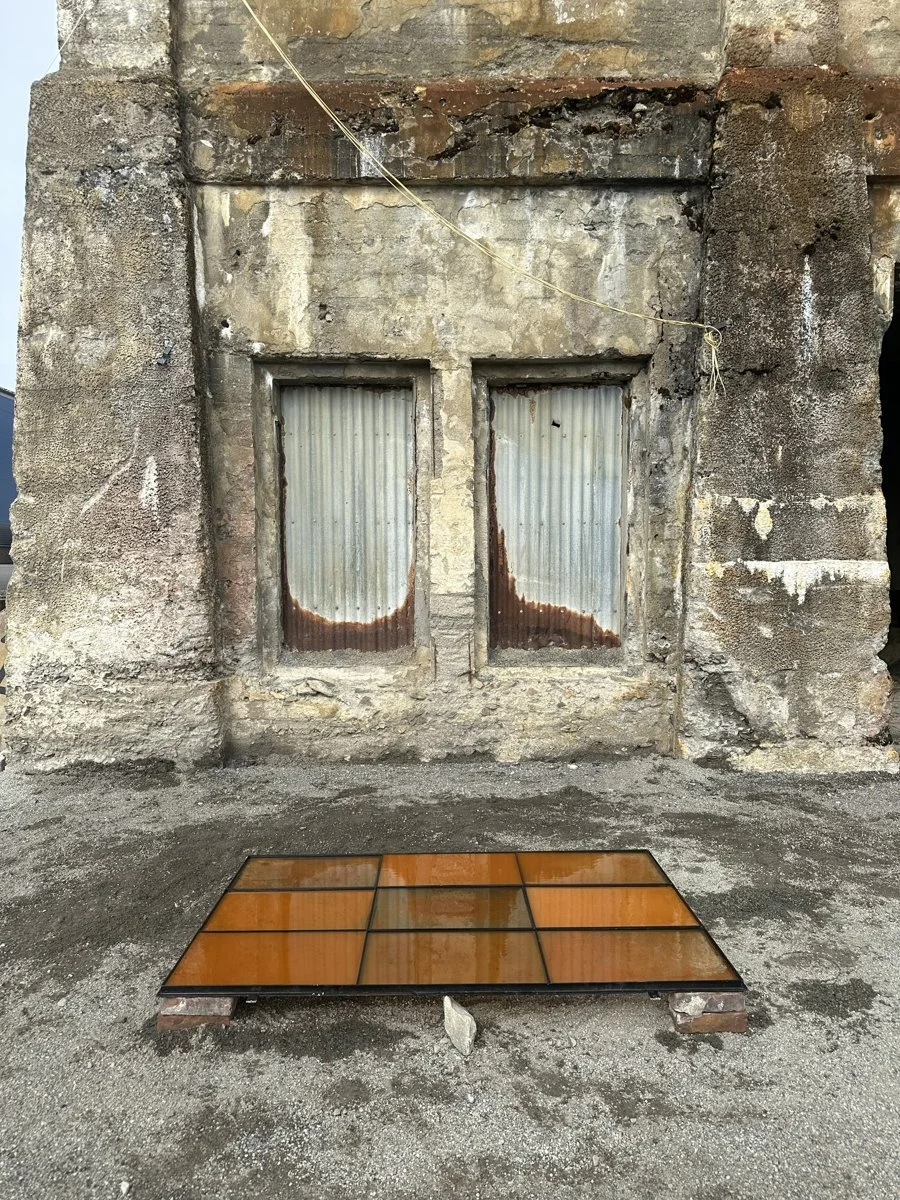
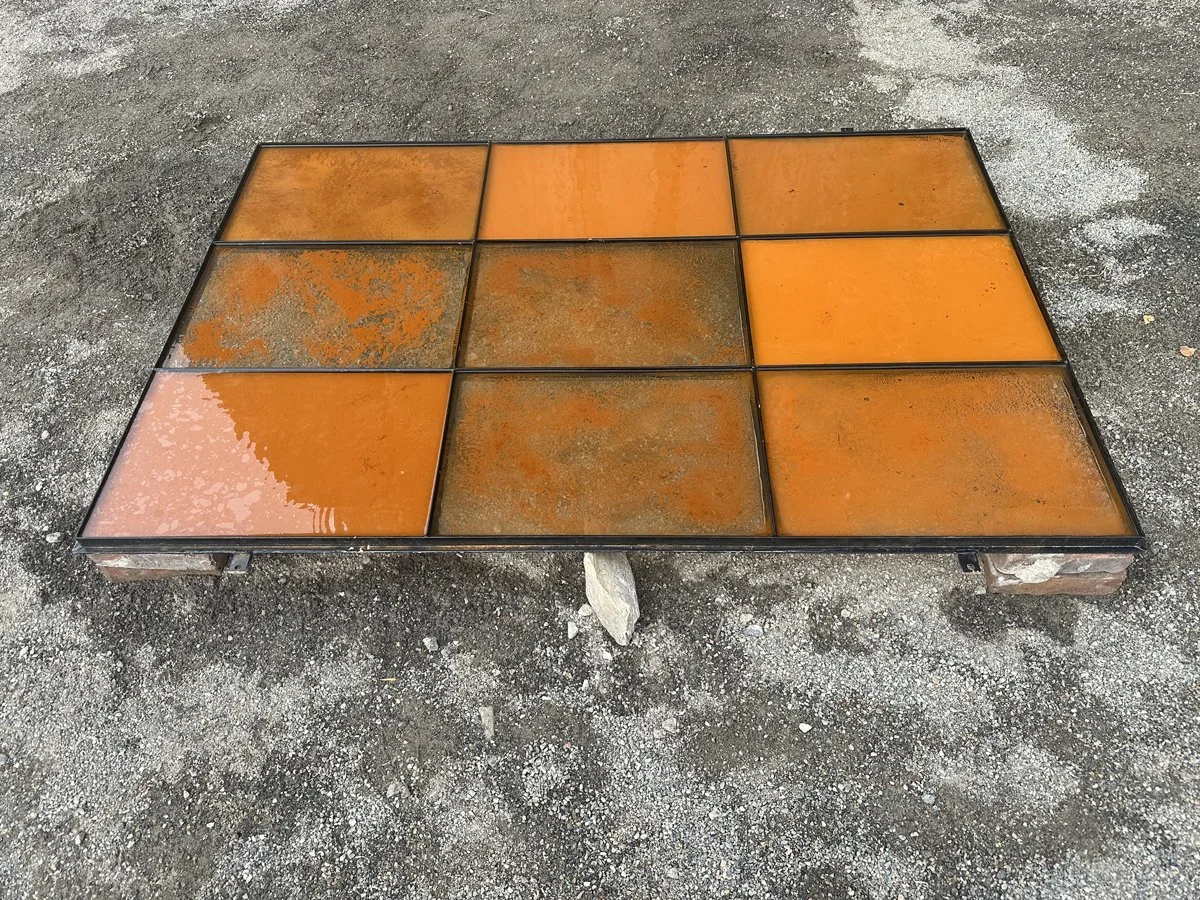
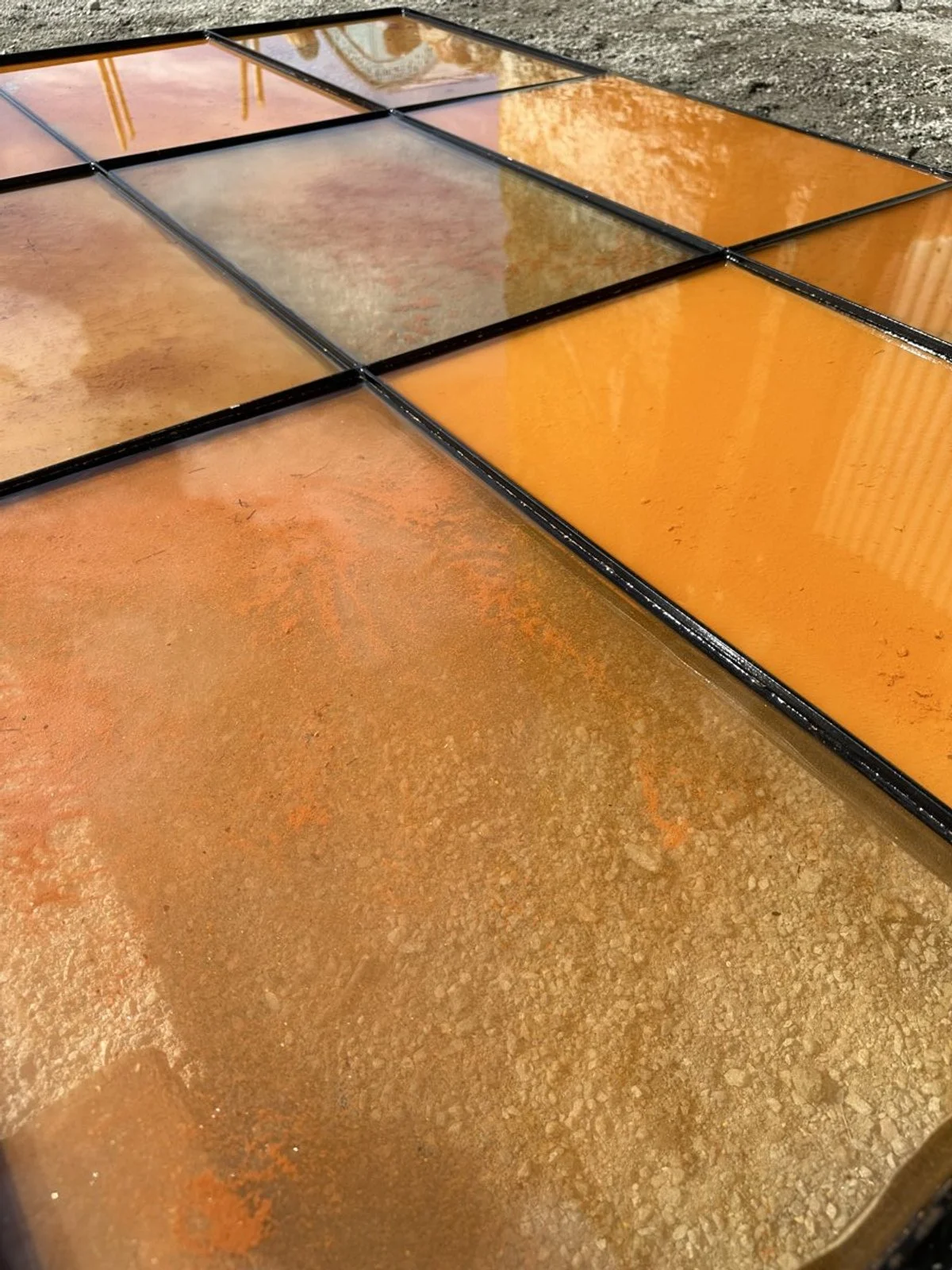
Alongside Tide, which was created directly at the shoreline through tidal action on steel plates, we developed Rust as a complementary work. Near the former ironworks, we established a small, ongoing “rust station.” Using seawater collected from the nearby coast, we filled found and already rusted containers together with various discarded metal objects. Over time, these vessels produced rust-infused water in varying densities and hues.
As the process evolved, completed rust water was continuously poured off, while new containers were activated to explore different corrosion effects. The resulting installation consisted of rust water in multiple tonal variations, contained within a horizontally positioned window frame salvaged from the ironworks. The work functions as a concentrated, distilled counterpart to Tide—less dependent on the open shoreline, yet equally shaped by material interaction and duration.
The collective living and working conditions during the biennale played an important role in the development of the project. Shared daily tasks—cooking, cleaning, shopping—created informal yet sustained conversations around artistic processes and working methods. Experiencing other artists’ practices at close range offered insights into differences in rhythm, visibility, scale, and pace.
In the final exhibition, the significance of site once again became central. Decisions regarding placement—whether works were site-bound or mobile—required negotiation between individual intentions and collective structure. These discussions challenged the balance between autonomy and collaboration, ultimately resulting in a constructive dialogue and a cohesive exhibition.
The project received strong public engagement and attention from local press.